
Your Building Approval (BA)
Updated: Apr 21
The background behind the certifier's stamp
Safe, compliant building work for Queenslanders
Certifiers act in the public interest, to help ensure the requirements of the National Construction Code (NCC), Queensland development Code (QDC) and Australian Standards are met. More about what does (and doesn't) require a building approval here.
What is the NCC?

The BA process - Learn more
The certifier works together with project stakeholders to facilitate the building approval application with council (more info from QBCC) . Once approval is obtained, building work can begin.
The approval process concludes following the final inspection and collation of certificates at the completion of the build. Then homeowners can enjoy peace of mind, knowing their home /pool is safe and compliant.
BA&A are private certifiers. We specialise in Class 1a and Class 10 building approvals in Brisbane (BCC) and surrounding regional councils. Find out about classes and building classification here
Need a fee proposal? Its free, and easy to get started.
No obligation - simply provide professionally drawn plans to info@buildingaaa.com.au or upload via the online form so you get insights on next steps or constraints, sooner.
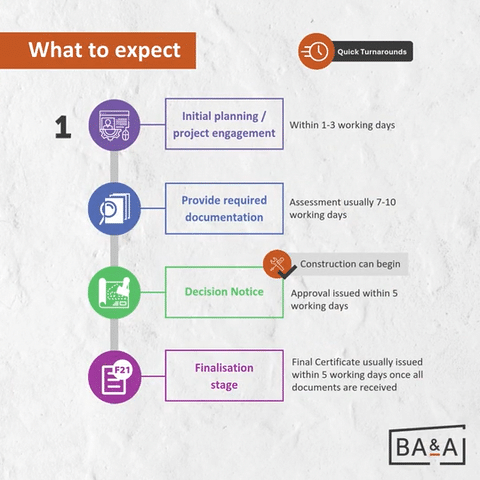
The chart below outlines the general steps and inspections through the building approval application.

Validity period
At Building Approvals and Advice, the building approval is valid for 18 months (for class 1a projects engaged from February 2025) or 12 months. Check your decision notice (approval email) for dates/ specifics. For demolition work, the approval / permit lapses after 6 months.
If the building work is not completed before the lapsing date, an extension of time may be granted. BA&A works together with project stakeholders to support finalisation.
Collating project documentation to send to the certifier
The approval document outlines paperwork that is likely to be required as the building work progresses.
Thanks for providing required forms via info@buildingaaa.com.
We'll update your file then provide a project specific list of required documentation, soon after the final inspection is complete.
The final certificate will be issued once all required documents are received.

What’s next
Finalisation Stage - see related blog post
Provide outstanding items to our office as soon as possible and prior to the lapsing date
Arrange final inspection - when all building work is complete
Request accordingly if an Extension of Time (EoT) may be required.
Booking your final inspection?
The engineer/ project stakeholders such as surveyors facilitate any required inspections as building work progresses. Send forms provided (such as the Form 12) to the certifier along the way.
Then, once building work is complete, contact BA&A.
Next the certifier's final inspection can be arranged and final documentation collated.
Email info@buildingaaa.com.au or call 07 3265 4114.
Once the inspection has been completed, the certifier will issue the Inspection Report. We will then issue a final list of certificates required to finalise the building application. Certificates required are to be completed either on a Form 12, Form 15, Form 16 or Form 43 as conditioned in the building approval.
More time required?
An extension of time (EoT) may be available. This is usually quick and easy for the applicant / builder to arrange. Get in touch with the office to update your certifier.
Discover how a DA (Development Approval - town planning) differs from a Building Approval (BA) under under the Building Act 1975
BTP town planning explainer video for homeowners
BA or DA (what's the difference?)
Want more information about your Building Approval (BA)?
Learn more about property searches.
Learn how early input from a certifier can support - more here
Download/ read through the glossary of certification terms

📑Class 1a new building work: the Livable Housing Design Standard may apply where it's been triggered by a planning condition or where the client has specifically requested it. More here (NCC)
Complex bespoke project?
Council's planning approval process runs in parallel, so we work with industry professionals who are getting ahead of site specific requirements early.
BA&A certifiers can also support designers and architects with navigating fire safety requirements like smoke alarm compliance and fire separation at the boundary.
💡Round up of resources and recommended links for professionals - click here.
✅ Plans ready, and need a fee proposal? Building Approvals and Advice (BA&A) are ready to help - contact us.


Comments